 Green Air Duct ClubSan Antonio, TX · Since 2009
Home › Blog › Mold in Air Ducts
A musty, earthy smell every time the AC kicks on is one of the most common complaints we hear in San Antonio — and mold growing inside the ductwork is a frequent cause. Here's how to recognize it, why it happens in our climate, and what a real fix looks like (versus a scare tactic).
Fill this out and we'll call you back shortly to confirm your appointment.
Prefer to talk? Call (210) 790-3600
It usually starts with a smell. The AC kicks on, and for the first few minutes the air coming out of the vents smells like a damp basement or an old closet — then it fades, and you forget about it until the next cycle. In San Antonio's humidity, that pattern is one of the most common early warnings of mold growing inside a duct system. Our mold remediation team starts every call the same way: not with a quote, but with a camera. Here's what you should know before you call anyone.
One caution, because honesty matters here: a musty smell alone doesn't prove mold. Heavy dust buildup, a dirty evaporator coil, or a wet drain pan can produce a similar odor. Any company that diagnoses mold from your doorstep — without looking inside the system — is selling, not inspecting. Our inspections are free and photo-documented precisely so you can see what we see.
Mold needs three things: spores (always present in household air), food (the dust and organic debris coating your ducts), and moisture. San Antonio supplies the moisture generously. Our AC systems run most of the year and pull large amounts of water out of the air — that condensate is supposed to drain away, but a slow drain, a cracked pan, or an overflowing line wets the insulation and duct surfaces nearby. Add humid attic air being pulled through small duct leaks, summer humidity that keeps duct interiors damp, and dust that never gets cleaned out, and the inside of a duct system becomes one of the most mold-friendly environments in the house. Homes around Canyon Lake and the Hill Country edge, with their extra humidity, see it even more.
One more local culprit deserves a mention: oversized or short-cycling air conditioners. When a system cools the house so fast that it shuts off after a few minutes, it never runs long enough to pull much moisture out of the air — so indoor humidity stays high even though the temperature feels fine, and the ducts stay damp. If your home feels cool but clammy, or the AC starts and stops every few minutes, mention it when you book an inspection. The mold is the symptom; the moisture behavior is the disease, and catching the pattern early is the difference between a cleaning and a recurring problem.
Proper remediation is a process, not a spray bottle:
Fragrance sprays and scented vent inserts mask the smell for a few days while the colony keeps growing. Fogging a system without physically removing the growth and its food source leaves the problem in place. And beware the doorstep scare pitch — a blurry flashlight photo and a same-day-only price. Real mold work starts with clear photos, a written scope, and a price that doesn't expire when the technician leaves. If a quote feels like pressure, it is.
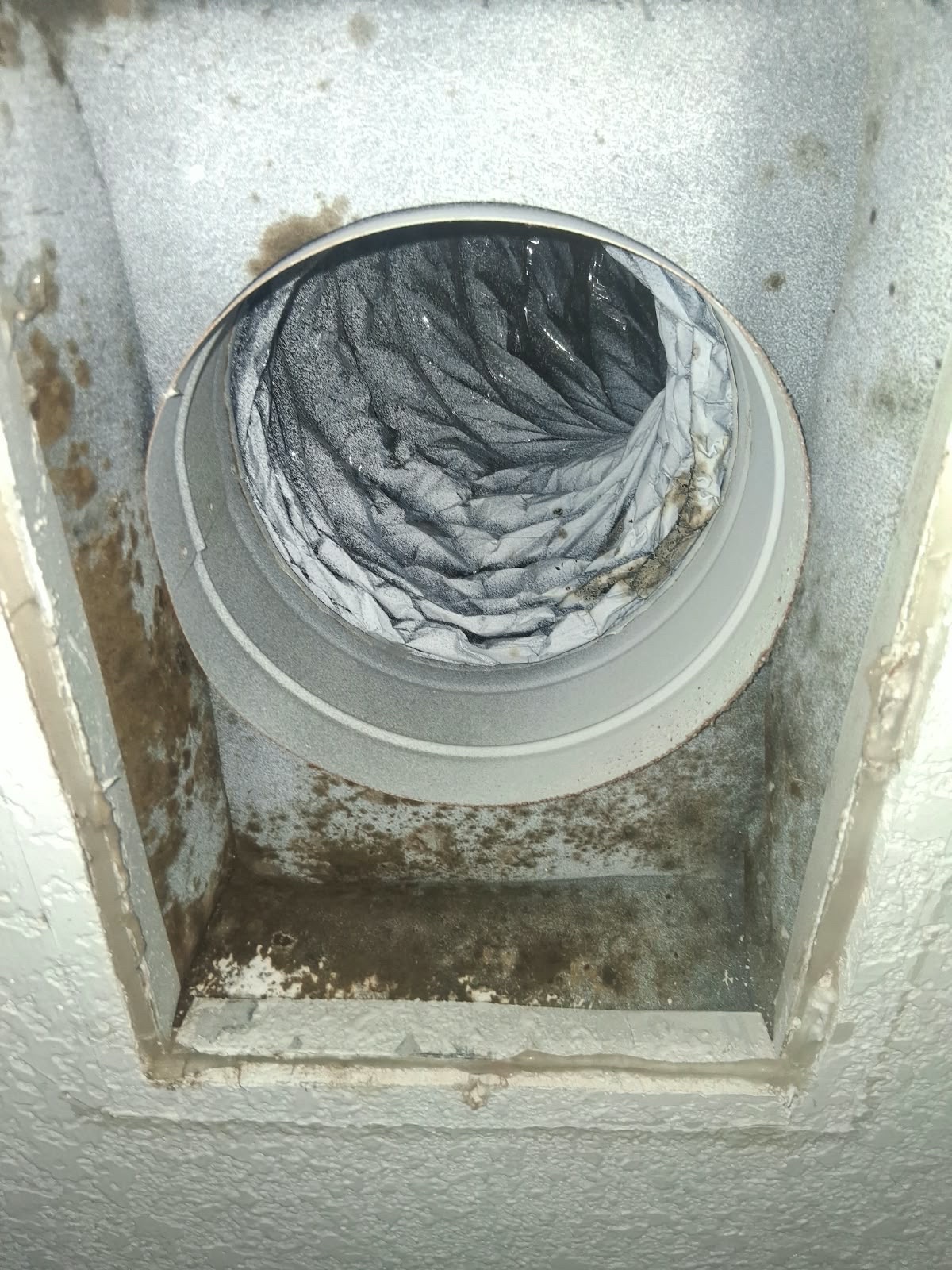
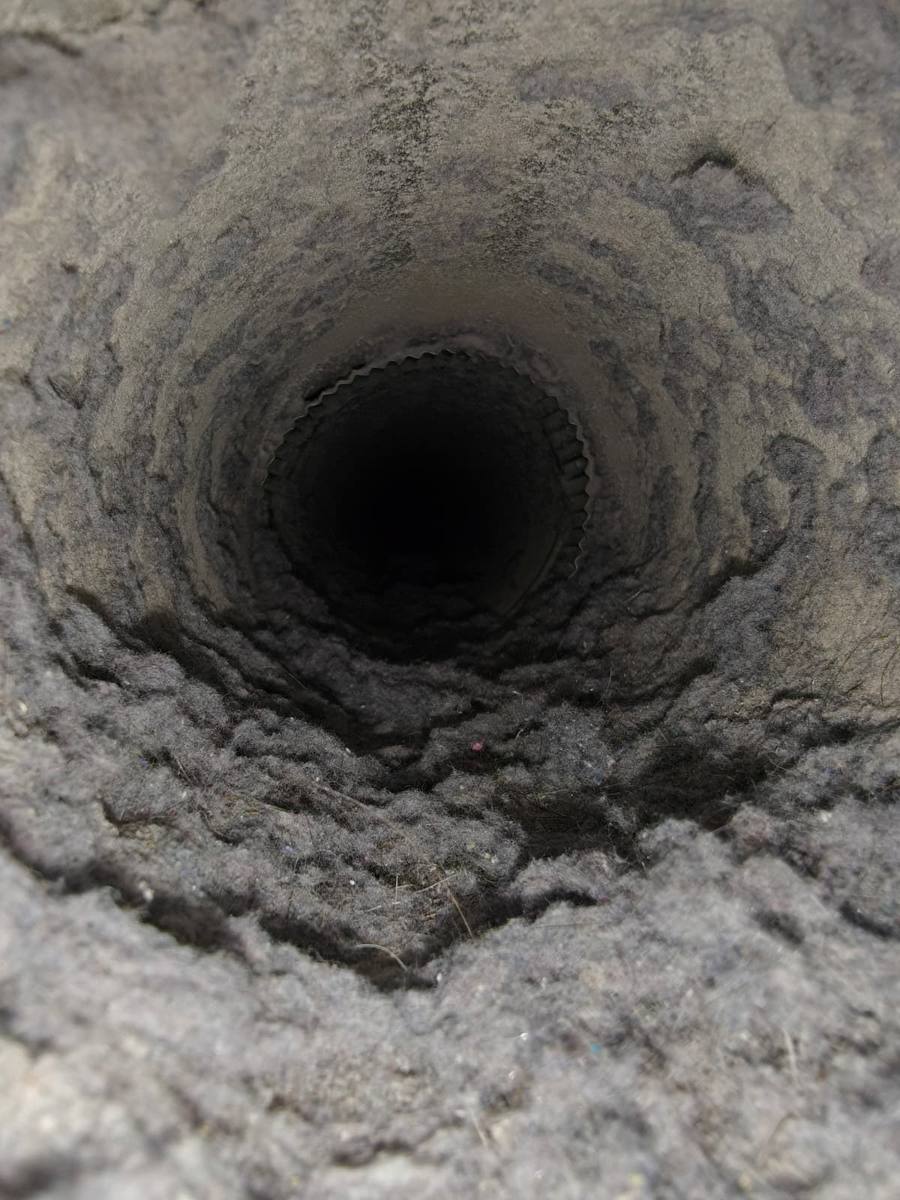
Homeowners often ask how to tell what they're looking at when they peer into a vent. A few general patterns help. Ordinary dust buildup looks gray or tan, feels dry, and coats surfaces evenly — unpleasant, but it's what a routine professional cleaning is built to remove. Mildew and mold growth tend to look patchy rather than even: clusters of dark spots — black, green, or white — that concentrate near the coil, around the air handler, at vent registers in humid rooms like bathrooms, and anywhere water has been. Growth also tends to come with that characteristic musty odor that plain dust usually doesn't produce on its own. Texture is another clue: colonies can look fuzzy or slimy where dust looks powdery.
None of this is a lab test, and color alone doesn't identify a species — plenty of harmless dust looks dark, and some growth is nearly invisible against duct liner. That's precisely why our process starts with camera photos and, when it's warranted, air quality testing rather than a verdict delivered from the doorway. What the distinctions above do give you is a reasonable sense of urgency: even gray dust means you're due for a cleaning; patchy dark growth with a musty smell means book the inspection now and don't run a "wait and see" experiment through another humid summer.
If your home has the smell, the spots, or the symptoms, don't guess — and don't let anyone else guess at your expense. Our mold remediation in San Antonio starts with a free, photo-documented inspection. If it's mold, you'll see it and get a written quote. If it's just dust, you'll see that too — and a $99 cleaning may be all you need. Call (210) 790-3600 any time; we're open 24 hours.
Complete duct cleaning for one flat price per system — unlimited vents included, before-and-after photos on every job.
📞 Call (210) 790-3600A musty smell is a strong clue but not proof — dust buildup and a dirty coil can smell similar. That's why we start with a photo inspection of the actual ductwork instead of guessing from the living room.
Mold in a duct system gets distributed to every room the system serves, which is why people often notice allergy-type symptoms that ease when they leave the house. We're cleaners, not doctors — if you have health concerns, talk to your physician — but removing the growth and its food source from the system is the practical fix either way.
Surface sprays don't reach growth deep in the duct runs or inside insulation, and they don't remove the dust and moisture feeding it. Effective remediation removes the growth and the conditions that caused it; anything less is temporary perfume.
Sometimes mold has colonized porous duct insulation or the duct material is deteriorating — in those cases cleaning isn't enough and replacing the affected sections is the honest recommendation. We'll show you the photos and explain exactly which sections and why, with a written quote.
Fix the moisture source: repair condensate drain problems, seal duct leaks that pull in humid attic air, keep filters fresh, and consider a UV light in the system, which works continuously against mold growth on the coil and nearby surfaces.
More guides from the Green Air Duct Club crew:
Mold in the ductwork spreads spores through every room. We remove it safely at the source — starting with a free, photo-documented inspection.
Read more →Regular cleaning removes the dust that mold feeds on. Here's the right schedule for San Antonio homes — and the events that change it.
Read more →Mold is one piece of the air-quality picture. Allergens, dust, UV lights, and testing — the full guide for local homes.
Read more →Our inspection is free and includes photos of the inside of your ducts. If it's mold, we'll show you — and quote the fix in writing. Call (210) 790-3600.
📞 Call (210) 790-3600 Book Online